Why You Can See the Moon During the Day—and When to Look
The daytime Moon reflects sunlight just as it does at night. Learn how its phase and position affect visibility, then try a simple observation log without special equipment.
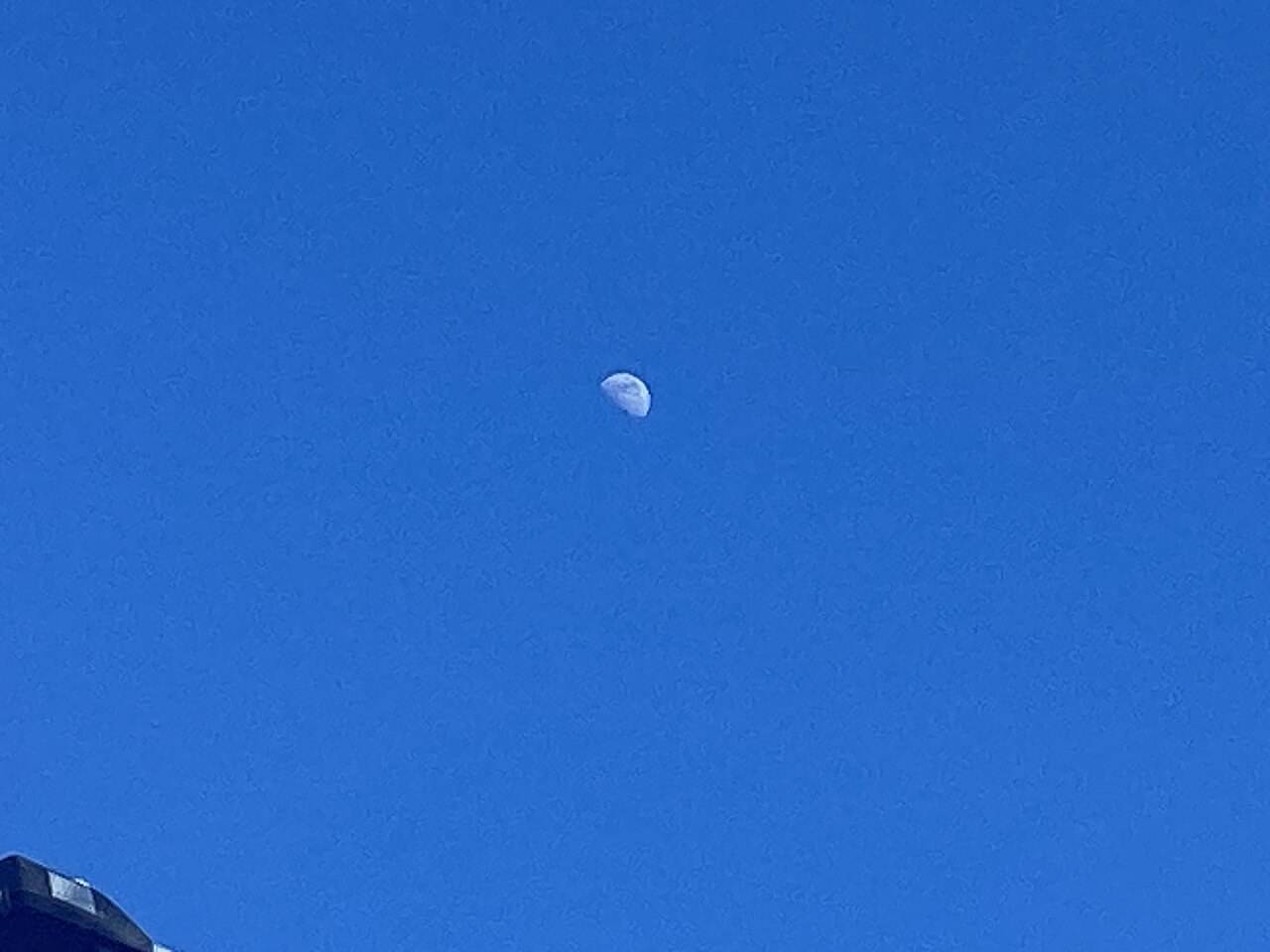
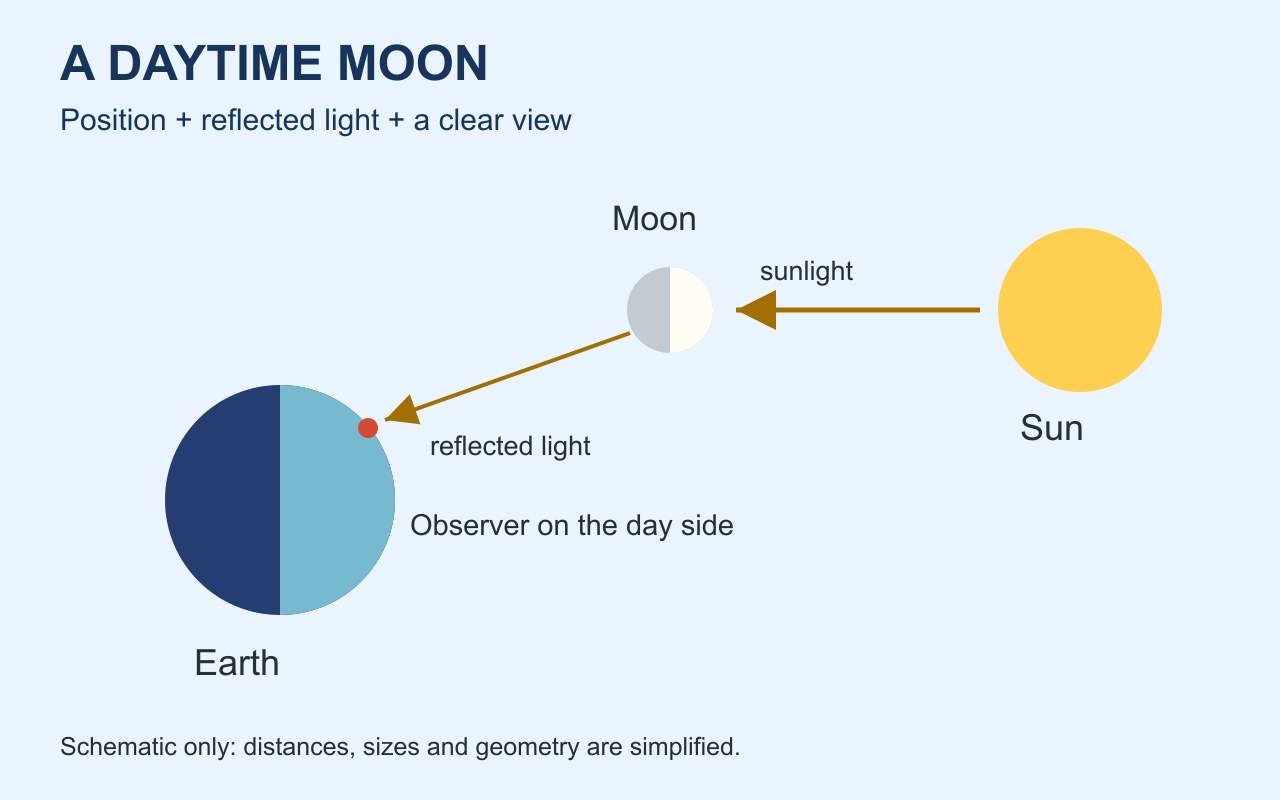
You can see the Moon during the day because it is above your horizon and reflecting enough sunlight to stand out against the bright sky. It has not stayed up by mistake. The Moon’s orbit does not assign it exclusively to the hours of darkness, and daylight does not switch off its illuminated surface. The interesting question is when its position and the viewing conditions make it easy to notice.
Three questions explain a daytime sighting
First, is the Moon above your local horizon? Second, does its sunlit part face you in a way you can see? Third, is there enough contrast against the sky, without cloud or an obstruction hiding it? These are separate questions. A Moon that is technically above the horizon can still be difficult or impossible to pick out.
NASA’s daytime-Moon explanation points out that the Moon spends almost as much time in the daytime sky as in the night sky. Its visibility is ordinary astronomy, even if a night-time symbol on a weather forecast has made the pairing of Moon and darkness feel automatic. A familiar object can occupy a less familiar part of your daily routine.
Moonlight is still sunlight in the afternoon
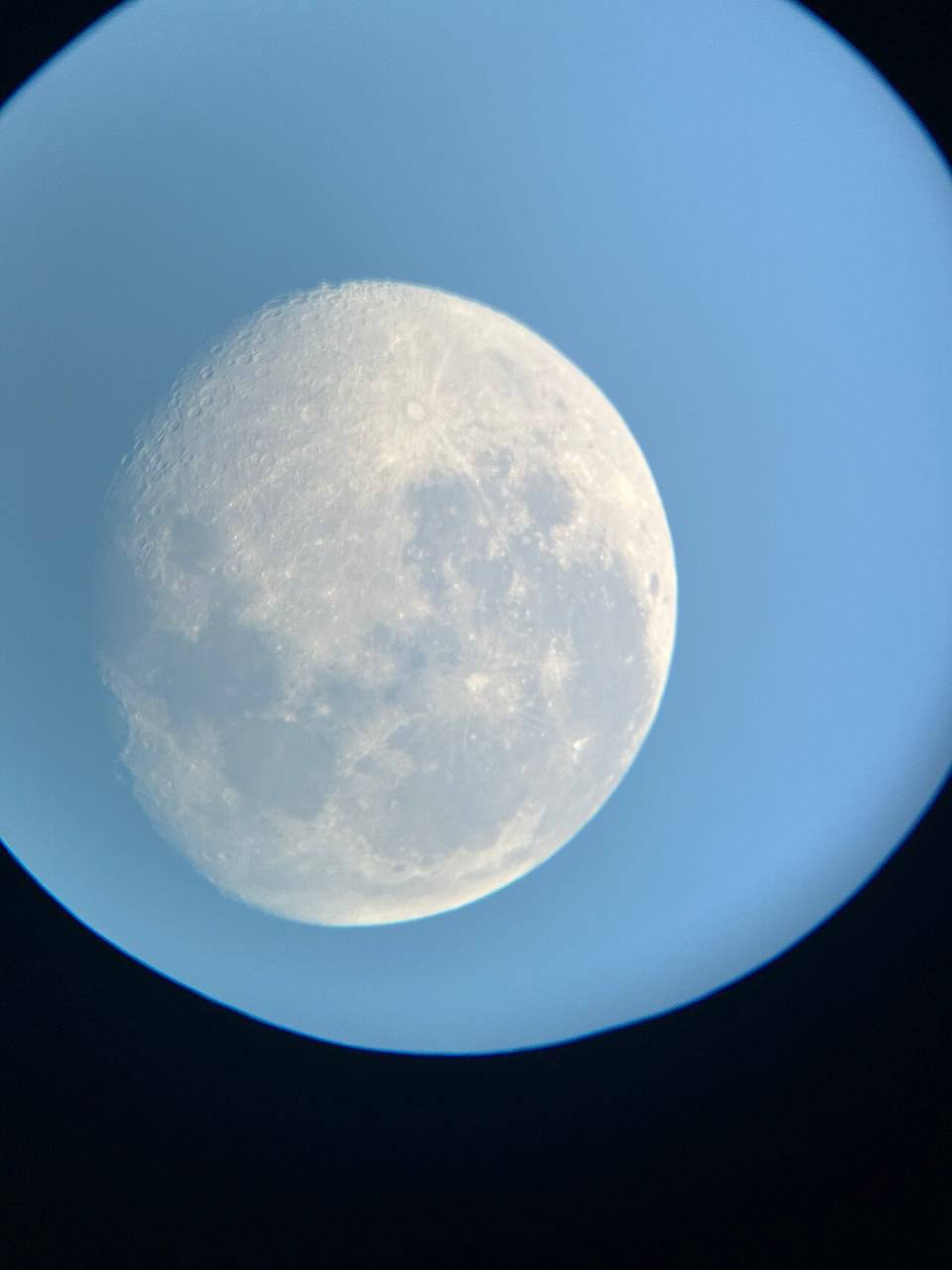
The Moon does not generate the visible light we call moonlight. Sunlight reaches its surface and some of that light is reflected toward us. NASA’s Moon questions explain this same process for the bright part we see at any time. The change from a dark background to a blue one affects how conspicuous the Moon looks; it does not create a second kind of lunar light.
This helps separate appearance from cause. A pale shape over a daytime roof and a bright disk above a dark landscape can be the same object illuminated by the same star. Do not use the apparent whiteness of a photograph to decide that the Moon has changed its material or begun producing light of its own.
Use the phase to choose a sensible observing window
The Moon’s phase and its position relative to the Sun are connected. NASA’s phase guide gives approximate rising and setting patterns that help with planning. Local dates, latitude, season and the horizon affect an actual sighting, so use these as broad windows rather than a timetable for your address.
| Phase or part of the cycle | Broad daylight opportunity |
|---|---|
| Around first quarter | Look during the afternoon; this Moon rises roughly around midday. |
| Waxing gibbous, before full | It can rise during the afternoon before sunset. |
| Waning gibbous, after full | It can remain visible in the morning after sunrise. |
| Around last quarter | Morning is a useful time to look. |
| New Moon | It is near the Sun in the sky and normally not visible; do not search near the Sun. |
Full Moon is roughly opposite the Sun and rises around sunset, setting around sunrise. That makes the middle of a bright afternoon a poor choice for looking for a full Moon. Our Moon-phases explanation covers the changing shape; this guide uses that geometry to help you decide when to step outside.
Try a short observation rather than a difficult photograph
Choose a clear afternoon near first quarter or a clear morning in the later part of the cycle. Start from a safe open place, with your unaided eyes and the Sun well away from where you are looking. Do not point binoculars, a telescope or a camera’s optical viewfinder toward the Sun. You do not need magnification for this activity.
When you find the Moon, make a quick sketch. Include a roofline or tree as a temporary reference, the approximate time and how much of the disk looks bright. The sketch can be rough. Its purpose is to preserve an observation you can compare with another, not to demonstrate artistic skill or identify every feature on the surface.
Keep a log that distinguishes “not seen” from “not there”
Try two or three opportunities on different days. Write down the date, approximate local time, sky conditions, whether the Moon was found and its approximate position relative to the reference you chose. If clouds block the sky, record that fact rather than concluding that the Moon never rises at that hour.
Here is a useful log format: “Tuesday afternoon; thin cloud; Moon found above the left end of the roof; bright portion drawn beside this note.” On another day, “Wednesday afternoon; overcast; no sighting” is still a complete observation. These sample entries illustrate the method; they are not reports of an observing session conducted for this article.
Keep the viewing place and time reasonably similar if you want an easy comparison. If you change both, note that too. A small record of the conditions gives your memory something firmer than a general impression that the Moon has been in an unusual place recently.
Why a phone photo may look disappointing
A photograph is optional. Begin with the view itself and use a wide scene if you want to remember where the Moon appeared. A tiny bright patch in a large blue frame can still document a real sighting. Enlarging that patch does not necessarily reveal detail that the original recording never captured.
If the image is unclear, keep your written observation rather than spending the whole outing adjusting the device. Weather and the local horizon may offer a better opportunity another day. Ordinary daytime skywatching is most rewarding when it becomes a brief habit of looking and comparing, rather than a demand for a dramatic picture every time.