Why the Moon Changes Shape Throughout the Month
Moon phases show our changing view of the Moon’s sunlit half. Follow waxing and waning, understand quarter phases and separate the monthly cycle from a lunar eclipse.

The Moon does not grow from a crescent into a disk and then shrink again. Its shape stays the same while our view of its illuminated portion changes. That is the essential idea behind lunar phases. Once you separate the Moon itself, the sunlight falling on it and the viewpoint from Earth, the monthly sequence becomes much easier to follow—and a familiar misconception about Earth's shadow falls away.
Start with the illuminated half
The Sun ordinarily illuminates one half of the Moon, just as it illuminates a daytime half of Earth. As the Moon travels around Earth, the fraction of that bright half visible to us changes. NASA describes this changing view as the cause of the phases. The boundary between lunar day and night moves across the face we see.
Imagine looking at a partly lit ball from different positions. The ball has not changed shape, but the visible bright area has. This model helps separate an object's physical form from its appearance under illumination. It is a useful mental picture as long as the Sun, Moon and observer remain distinct in the explanation.
New Moon begins the familiar sequence
At new Moon, the Moon's sunlit side faces mostly away from Earth, leaving the side toward us dark. Over the following part of the cycle, a crescent becomes visible and the illuminated portion grows. The word waxing means that the visible illuminated fraction is increasing, not that the Moon is physically gaining material.
The sequence continues through first quarter and waxing gibbous toward full Moon. Gibbous describes an illuminated appearance larger than a half disk but not yet full. The vocabulary is easier to remember when attached to a visible pattern rather than learned as a disconnected list of names.
Quarter refers to the cycle, not a quarter-lit disk
At first quarter, the Moon appears approximately half illuminated from Earth. The name can be confusing if you expect quarter to describe the fraction of the disk that looks bright. It instead relates to the Moon's progress through the cycle. Third quarter also presents a roughly half-lit appearance, later in the sequence.
That distinction is worth pausing over because it solves a common naming puzzle. A phrase can describe timing rather than visible area. When reading an observing guide, ask whether a term concerns the phase sequence, the illuminated fraction or the observer's location. Those are connected ideas, but they are not interchangeable.
Full Moon is followed by waning
Near full Moon, the illuminated face is directed toward Earth. After that, the visible bright fraction decreases through waning gibbous, third quarter and waning crescent, eventually returning to new Moon. NASA gives the phase cycle as about 29.5 days. It is a repeating astronomical cycle rather than a sequence that fits every calendar month exactly.
Waxing and waning are therefore useful directional words. You can see a crescent without yet knowing which part of the cycle it belongs to; knowing whether the illuminated fraction is increasing or decreasing gives it a more precise name. A dated observing record helps you establish that change over several days.
Earth's shadow is a different event
Ordinary phases are not produced by Earth's shadow covering the Moon. NASA explicitly distinguishes that explanation from a lunar eclipse, when Earth's shadow does affect the lunar surface. Mixing the two mechanisms makes it difficult to explain why a crescent is common but an eclipse is not a monthly event.
Our solar and lunar eclipse guide follows the special alignments involved. For the normal phase cycle, keep the simpler explanation in view: one half is illuminated by the Sun, and our angle on that half changes. No object needs to cover the Moon to produce an ordinary crescent.
The appearance depends on your viewing orientation
People in different hemispheres can see the same phase from different orientations. This is one reason a rule based only on which side looks bright can be misleading if it is presented as universal. A diagram may be drawn for a particular viewpoint without announcing that assumption prominently.
Read the diagram's explanation before comparing it with your sky. If the crescent appears differently oriented, that does not mean the Moon is in a different phase for you. Separate the illuminated fraction from the way the disk is rotated within your field of view. The geometry can be consistent even when the picture looks unfamiliar.
Keep a small observation record
When conditions allow, sketch the Moon over several dates and write down the time and approximate direction. Record what you actually see rather than completing a perfect textbook sequence from memory. Clouds, buildings and the Moon's position may prevent an observation on a particular night; a missing entry is useful information too.
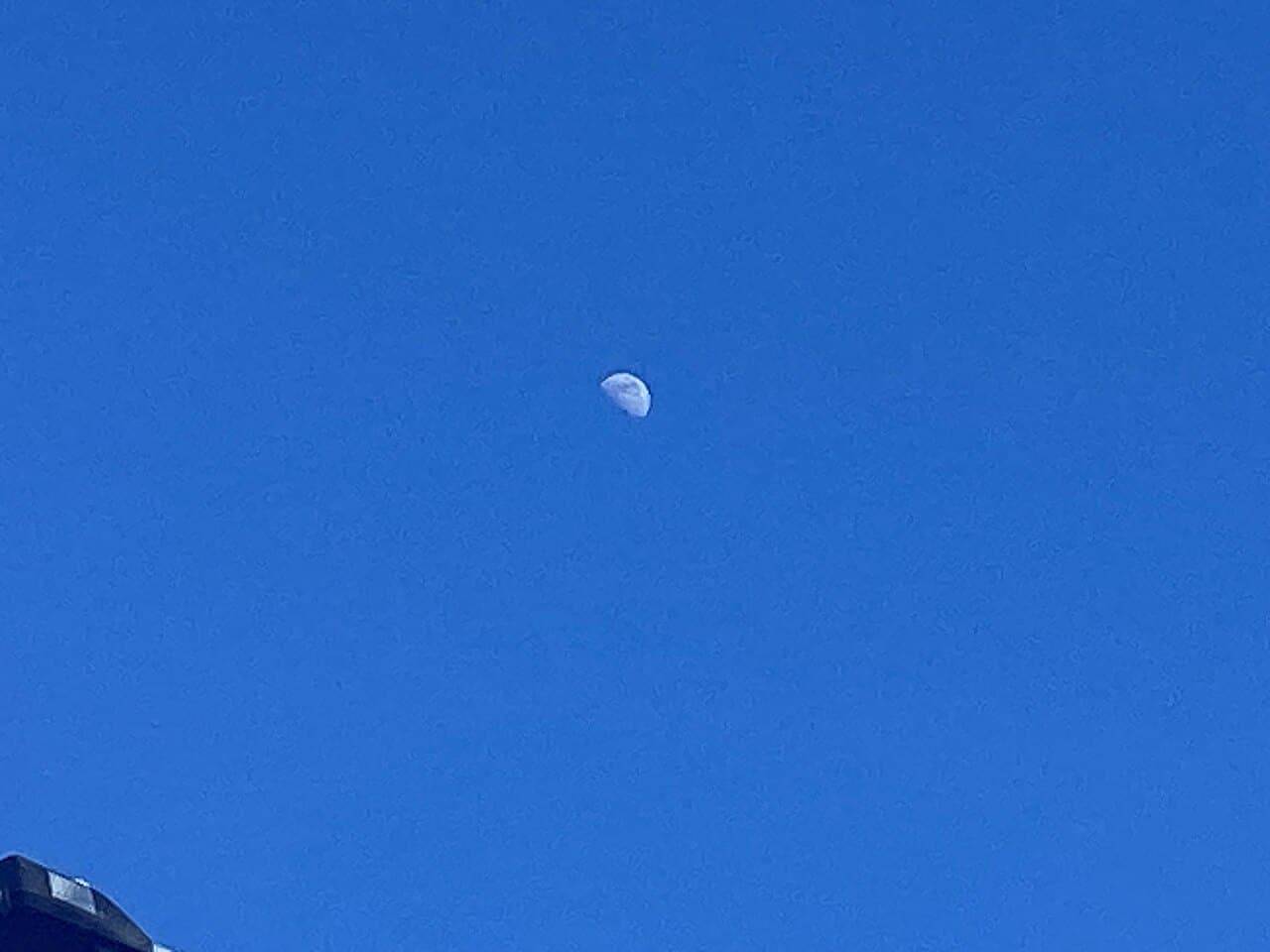
You may also notice the Moon during daylight. Its presence in the daytime sky is not a mistake in the cycle. Avoid looking anywhere near the Sun while searching, and use an appropriate published Moon guide if you need help planning a safe observation. No telescope is required to follow the broad phase changes.
The monthly pattern is a lesson in viewpoint. A single world keeps its shape while sunlight and orbital geometry change the part visible to us. Follow the waxing and waning rather than imagining a shadow creeping across every month, and the familiar Moon becomes a clear demonstration of motion in three dimensions.